

Mindset plays a significant role in determining life’s outcomes. It also plays a critical role in coping with life and alters emotional experiences. By understanding, adapting, and shifting your mindset, you can improve your health, decrease stress, and become more resilient to life’s challenges. Carol Dweck, Stanford psychologist and author of Mindset: The New Psychology of Success, says your beliefs and thoughts play a pivotal role in success. “Whether conscious or subconscious, they strongly affect what we want and whether we succeed in getting it,” Dweck says. “Much of what we think we understand of our personality comes from our “mindset.” This both propels us and prevents us from fulfilling our potential.” Now we discuss both Positive and negative beliefs in their respective thoughts, actions and outcomes in life .
What are Beliefs, How we Can identify them ?
Beliefs are the inner convictions about yourself, other people, or the world in general. You yourself have the choice to decide how you perceive yourself and your environment. Negative affirmations put a damper on your mind, cause pessimism to grow, and can actually lead to failure. While, on the other hand, you use positive affirmations and really anchor them in your subconscious, it can give your life a whole new turn! According to studies when you are born you do not have a single positive affirmation rooted in our mind. But you don’t think negatively yet either, and yet you develop beliefs throughout your life. This already begins in your childhood and is significantly shaped by your parents. If you experience appreciation, motivation and positive feedback at home, this feeling later turns into positive affirmation and if the same you experience negative feedback at home, demotivated and feel ignorant these beliefs turns to negative affirmation.
The Power of positive Beliefs :
Before you can strengthen your mindset with positive beliefs, you must identify the negative ones. This is because negative thoughts will prevent you from achieving your goals. But don’t worry, you’re not alone—negative self-talk happens to everyone. The predisposition to think negatively can be genetic, a result of upbringing, conditioning, or both. Humans began to imagine our beliefs as the root systems of our lives. What we believe—whether we realize it or not, is driving our decisions and behaviors every day. Change the belief, and you’ll likely change the behavior too. By contrast, keep the belief the same, and we will continue to get the same outcomes. Positive belief are the belief that help you to feel motivated, confident and capable. Moreover it often focus on growth, success and self worth. Positive belief help you to take risk, stay persistent and maintain a positive outlook during tough times. Furthermore it boost self esteem and can lead to better mental and emotional health.
How Negative Beliefs shape our Reality :
Negative belief Patterns enhance self sabotage and often lead to actions that prevent success. it leads to erode self esteem, making it harder to belief in ones abilities and takes on challenges. Moreover it causes fear of failure or rejection which may result in avoiding valuable opportunities. Negative thought’s create a fixed mindset , preventing you from from trying new things, limiting learning and pushing past your comfort zone.
Transform negative beliefs into positive ones :
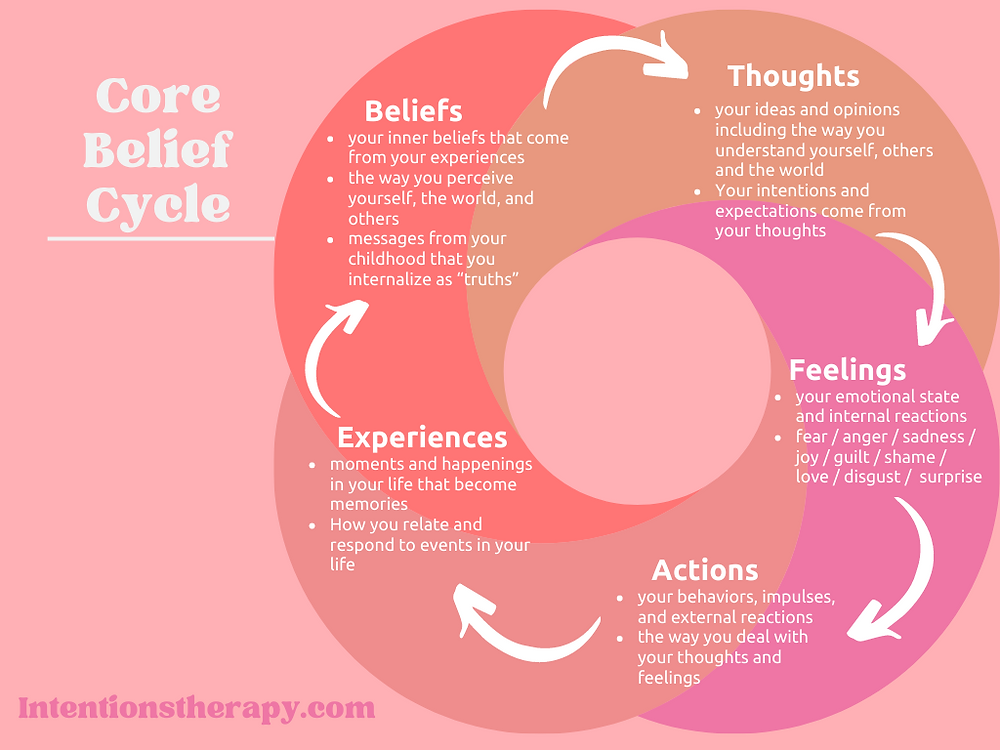
Before we look at transforming negative thought patterns into positive affirmations, we must first differentiate. Here are some examples of beliefs associated with a negative keynote:
- “I am not capable of doing that”
- “Why I am failing every time”
- “Why always people think negative about me “
- “Bad thing happens always with me”
The most important approach is to recognize your negative beliefs and accept their existence.
Now you have the chance to transform them into positive affirmations and change your life in the long run. following five steps will help you dissolve your old, destructive affirmations and create your own positive Belief system
Step 1 : Prove the opposite
“I’m a loser”, “I can’t do anything”, “I’m not fit enough” – the list of negative beliefs can go on forever. But do the negative affirmations really apply to you? Look for specific examples where the opposite has occurred. When was the last time you were praised? What successes have you had in your life? And are you really as unfit as you claim? Everything that speaks against your beliefs is important. This is how you convince yourself and your subconscious that your negative affirmations are only in your head.
Step 02 : Understand Your Thoughts
Many beliefs have been with us for years or decades, and we use them subconsciously. With the help of mindfulness, you can identify negative beliefs and write them down on a list. Observe yourself in everyday situations. What do you think about when you have to give a presentation at work? A positive affirmation might be, “Oh, I’m excited, I’m sure I’ll find an exciting topic for the staff.” A negative belief, on the other hand, would be, “Oh no, that’s going to go wrong again anyway, I just can’t do something like that.”
Step 03 : Face the consequences
While positive affirmations can keep us moving forward, negative beliefs keep us from doing a lot of things. Now it’s time for reckoning. Grab a piece of paper and a pen and deal with the consequences of your thoughts. How many times have you avoided a situation because you didn’t believe in yourself? Have you ever ran away from a date because you didn’t think you’re worthy of love anyway? Did you not send your application for a job because you “can’t do anything anyway”? Write down such situations and visualize where this destructive thinking pattern has led you so far.
Step 04 : Deal better with your Thoughts
It looks completely different when you suddenly see your destructive thoughts in words in front of you. These are your thoughts that you carry with you and that significantly shape your life. To dissolve them, you have to deal with them. Read them out loud to yourself and realize how absurd some of them are. Would you ever talk like this to your partner, family or friends? If not, why do you feel that way about yourself?
Step 5: Create positive affirmations for yourself
You know your negative beliefs and have now reached the point where it is time for a change. By making it clear to your brain that the negative thoughts are not true, you make room for something new. We also explain below how to develop your own mantras and internalize them in your subconscious. First, however, it is important to transform your existing negative affirmations. Instead of thinking, “I don’t want to give a talk, I can’t do anything anyway,” feed your thoughts with, “I’m a little excited, but I know a lot, and I’ll wow the audience.”